Welcome to Abaddon Books!
 
Latest Titles
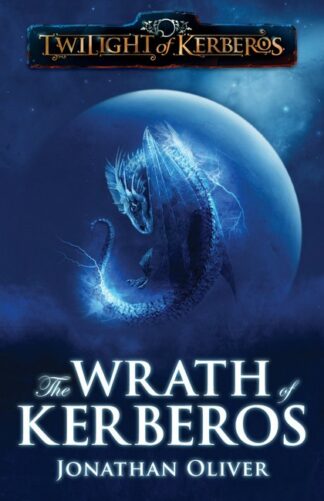
The Call of Kerberos
Jonathan Oliver
Night's Haunting
Night's Haunting
Matthew Sprange
The Crucible of the Dragon God
Mike Wild
Death got no Mercy
Death got no Mercy
Al Ewing
Evolution Expects
Evolution Expects
Jonathan Green

Book of the Moment

The Clockwork King of Orl
By Mike Wild

The Clockwork King of Orl "There's a whole world out there ­ and it isn't ours!"

The words of her mentor inspire Kali Hooper to explore the lost places of Twilight, unearth the secrets of its past and discover the fate of the vanished Old Races. So far, so good. But when an unexpected encounter in the deadly Spiral of Kos brings Kali head to head with Twilight's all-consuming Final Faith, she finds herself...

Availble Now | Read More
Latest News
New Series Announcement!
By David Moore - 19 Mar, 2010
In 2006, volunteers working in the archives at Salisbury Cathedral uncovered a fifteenth-century manuscript, previously unknown to scholarship. It was apparently a sequel to the Morte d'Arthur; the frontispiece titled it The furtherre boke of Kyng Arthur & of his noble knyghts of the round table, by Sir Thomas Malorie. The style and vocabulary proved consistent with the Morte, and analysis of marks on the edges of the pages suggest that the paper was from Caxton's workshop around the time the Morte was printed.

Specialists at King's College, London, have suggested that the stories may have originated as notes made while Malory was writing the Morte and discarded as superfluous, that Caxton persuaded Malory to develop into full tales after the success of the first book. The second volume was apparently never completed and at any rate never printed.
Late last year, Abaddon successfully negotiated exclusive access to the material, and is commissioning some of the UK's most exciting up and coming authors to modernise the language and make it accessible to our readers.

Malory's new stories are good British chivalric adventures at their best: brave, noble knights, questing for honour and glory; wise and beautiful women, shrewdly seeing into the hearts of those around them; monsters and evil men, defeated at last and thrown to their destruction.

The first tale, Thee sad comedie of Sir Alymere and thee Blacke Chalyce, is being novelised by Steven Savile as The Black Chalice even as we speak, and is due to hit the shelves at the beginning of next year.

Caveat Emptor: Some of the statements made above are, in fact, lies. :)

Read More
Pat Kelleher interviews Weston Ochse!
By Jenni Hill - 18 Mar, 2010
Abandoned homes at the Salton Sea, wikipedia stock photos.

With eclectic collections of horror stories and a Brammy in the bank for your first novel (yes, I´m looking at you, Scarecrow Gods) what was it that drew you to the good ol´ classic Zombie?

Zombies! Taste like chicken! Seriously, I’ve never been one to get too excited about tropes. The traditional monsters of horror seem to be done to death. Probably of the hundred or so stories I’ve had published, less than ten of them deal with vampires, zombies, werewolves and the like.
I’ve always been more of a dark fantasist; I like to create textured landscapes populated by real characters who I then put in improbable situations. I’ve tended to create my own themes, my own monsters, and my own horror elements. So writing zombies was something new for me.

But zombies have something going for them that all the other tropes do not; they are pop culture icons. I inhale pop culture and exhale satisfaction. I love the iconography of registered trademarks and consumer logos. I crave music and television and magazines. I’d sleep on a bed of TV channel guides if it would mean that I could by osmosis relive the first 50 episodes of Gilligan’s Island, Bewitched or I Dream of Jeanie.
Because of their post modern representation in the original Dawn of the Dead, zombies have become as much a piece of pop culture as the Golden Arches, delivery pizzas and over-priced coffee from teenage American baristas.

If I was ever going to do a trope it was always going to be a zombie.
Zombies are cool. Zombies are badass. Even better, zombies are so badass cool that they don’t even know they’re monsters.

Cover artwork for Weston Ochses' 'Empire of Salt', painted by Greg Staples. Click for horrible high-def version!


As an American, how did Abaddon, a publisher that´s as British as Fish `n´ Chips and 2000 AD, first appear on your radar? What attracted you to them as a potential publisher? Or more to the point, what exactly do they have on you?

What’s 2000 AD? Is that a motor oil? HA! Just kidding. Put down the knife. Seriously, the folks at Abaddon caught me pilfering nursery rhymes from a Grimms' Fairy Tales book and selling it to the Star Trek franchise as Klingon Fables. They also caught me coming out of a massage parlor in West Hollywood, where I was only asking for directions, I swear. The kicker was when I was filmed beating up a herd of Girl Scouts and stealing their cookies. With all the evidence against me, it was too easy for Abaddon to force me to pay them money and send them a kick-ass free zombie novel.

Seriously this time; I was first drawn to Abaddon when 'The Afterblight Chronicles' first began. I thought the idea was incredible. I still do and would love to work on the franchise. I communicated with Jonathan Oliver, editor-in-chief of Abaddon, during this time. We agreed that we’d like to work together sometime in the future, but couldn’t decide in what capacity. Then came 2008 and the Book Expo of America which took place in L.A. Abaddon had a space in the show and I took the time to drop by and say hello. Pretty soon, Abaddon reopened their submissions and were looking for some more zombie novels. I’d been thinking about doing one regarding the Salton Sea anyway, so this became the perfect opportunity to pitch the project. Jon loved it and here we are today, with me sitting here being interviewed about a zombie novel coming out from Abaddon with a super-kick-ass cover.

Apart from your award winning novel, you´ve also had great success with your `Backwoods Horror´ short stories. You obviously enjoy working in both forms. Do you have a preference?

For me the story decides the form. I was lucky starting out. I began writing short stories. Me and a fellow named David Whitman became household names in a very short time with our collection Scary Rednecks and Other Inbred Horrors. The collection garnered insane attention and outsold everything the then publisher, Darktales, had to offer. The stories in the collection inspired independent film projects and hearkened in a period of backwoods horror fiction in America that is only now beginning to slow down.

I still meet folks at conventions and book signings who bring copies of that old book, or the hard cover reprint from Delirium. Instead of what I’m working on now, they want to talk about those old stories and how much they meant to them. I still remember a reading I did at Horrorfind I in Baltimore. There must have been seventy five people in the room. I’d advertised that there would be cheese balls and beer and I didn’t lie. I went to the discount store and bought ten big bags of cheese balls. Then I went and bought 8 cases of the local brew, National Bohemian, or Natty Bo.
I passed out the beer and encouraged everyone to throw cheese balls during the reading. It was sheer and utter chaos with me reading at the top of my lungs. People still come and talk to me about that. What a blast that was; even more fun than the bass boat radio hour reading we had the following year. Ah, the good old days.

What is it about Horror as a genre that attracts you as a writer?

Funny thing about horror is that I never knew I was a horror author. In fact, the question is still up in the air. When I first started writing I was just an author. I wrote what I wanted. It wasn’t until I began to sell things that I was called a horror author. But then I sold my first novel, and although it won a Bram Stoker Award, I have it on record from several other publishers that it’s a dark fantasy novel. I’ve since pitched a few novels to agents and publishers only to have them come back and tell me that what I was pitching wasn’t horror, and it wasn’t science fiction, and it wasn’t fantasy, but instead, some kind of amalgam of all three. At that point I usually naively bat my eyelashes and ask, “So? Is there a problem with that?” As it turns out those sorts of novels are immensely popular, but because publishers have a hard time marketing them, they are few and far between.

So do I write horror? I think so. Do I write science fiction? Yes. What about fantasy? That too. I have two trilogies in the works right now. One is 'The Cycle of the Aegis' and is a combination of all three. Those books are immensely popular. In fact, I’m writing the final book now. The other trilogy is 'The Vampire Outlaw' trilogy, which is horror, adventure and space opera. This is also immensely popular. It’s what I want to write.
It’s what people want to read.

But you asked me what it was about horror that I like, didn’t you. I’ve always felt that horror is an emotion and it’s the manipulation of that emotion that makes horror good horror. Horror is about the psychology of fear, which gets to the very heart of characterization. There’s nothing better than to give a character something nice, then make them terrified they’ll lose it, whether it’s a Barbie Doll or their very lives...


-

Stay tuned for the follow up to this interview, where we turn the tables and Weston interviews Pat about his forthcoming series!

-

Read More
'Tide of Souls' review
By Jenni Hill - 11 Mar, 2010

Read More
Lethal Behaviour
By David Moore - 10 Mar, 2010

Read More
Pornokitsch interviews Paul Kane
By Jenni Hill - 10 Mar, 2010

Read More
Review at TheNovelBlog.com
By Jenni Hill - 08 Mar, 2010

Read More
10 rules for writing according to Jon
By Jonathan Oliver - 04 Mar, 2010

JON'S RULES FOR WRITING AND GETTING PUBLISHED (AND MAYBE STAYING PUBLISHED).

1. If a publisher says they are closed to submissions don't e-mail them an entire novel and then spend every other day asking them whether they've read it yet and reminding them how amazing this novel is. They will not thank you, your submission won't be read and, very likely, neither will your future ones. Also do some research on your chosen publisher, don't just use a scattergun submission approach. It's unlikely that Graveyard Books (I made that name up, apologies if it's real) is going to want to see your book on Breeding Newfoundland Dogs.

2. Enjoy what you're writing. If you're writing SF/Horror/Fantasy you should at least be a fan of these genres and well read in all. After all, you're going to need to know what has gone before and what works or doesn't work. In fact, read as widely as possible anyway. If you just confine your knowledge of literature to the genre stuff then not only are you missing out on some gems, but your work is likely going to tread too familiar territory. Mix it up a bit.

3. Don't think that just because an idea would make a great film/TV series that it's going to translate well into prose. Sometimes fiction can do things that film can't and vice-versa. Also, don't write a book with a view to it being one day a great movie. That's a hostage to fortune and, ultimately, you'll probably be disappointed when it happens anyway and the studio rapes your precious work.

4. Don't just repeat what you've read and imagine that it will work. I've you're a big fan of David Gemmell I'd be unlikely to publish your novel Driss The Legend. "You'll love this, it's just like Gemmell," you'll say. Well, in that case I'll read Gemmell then won't I? Influences are fine, but try to make your work your own.

5. And this is where I start running out of ideas... erm. Nice weather.

6. Oh yes, it's usually useful once you've finished your mighty tome to get someone else to read it, in fact several people will be ideal. After all, after months/years of working on the damn thing you probably no longer have any critical distance from it and can't see the wood for the trees. A fresh view on it will pick up on things you may not have noticed and show you the way to further revisions and improvements.

7. On that note, when you submit a final manuscript to your publisher, send them something you would be happy to go to print the very next day. In other words, send out the most final and polished version you can.

8. If you're writing a fantasy novel, avoid overly complex names. Okay, so we don't particularly want to know a story about Bob The Slayer, or Derek The Destroyer (or maybe you do?) but neither do I want to get bogged down in the trials of Yglikinikas The Third, Son of Ylinkizasmus The Second, Heir of all Allundrianianuyhusus.

9. Just because one publisher doesn't like what you do, don't give up and don't chuck your work away. After all, none of us editors are perfect and sometimes what doesn't work for us, may well work fine for somebody else. Hell, it may even become a huge seller. If someone had pitched Pride and Prejudice and Zombies to me for example, after I'd stopped laughing at them, I'm sure I'd have politely said no.

10. Tell the best story you can. Doesn't matter what kind of writing you're doing, if you're working on your finely created opus, or doing a series of action/adventure books based on a cartoon/film/cereal then just do the best job you can. Professionalism and commitment will get you a long way. If you do a project half-arsedly it will certainly show and you won't be invited back to the party.

Anyway, that was profound wasn't it? I may well be wrong about all of the above and it may turn out I'm a massive hypocrite or something, but them's my thought at 4 in the afternoon on a Thursday.

Happy writing folks!


Jonathan Oliver
(Editor/Overlord/International Playboy - delete as applicable)

Read More
Podcast Part #2!
By David Moore - 03 Mar, 2010
  • Not on iTunes, and have sworn to end your life rather than download a single Apple application? Here to help! Just point your RSS client here to download the feed without putting a penny in Steve Jobs' pocket. Keep an eye on the blog for updates, in case we change the host or something crazy like that.
  • Bewildered by the term "RSS" and unsure what all this means? No problem, ignorant Luddite! Just follow the exact same link, click on the link to the mp3 of the episode you wish to hear, and you can listen right on your browser! Everyone's a winner!

Read More
Podcast Coming Up!
By David Moore - 01 Mar, 2010

Read More
Zombies!!
By Jenni Hill - 28 Feb, 2010
The Olivers have a chance to make a new home at Salton Sea. Looking forward to California fun, sun and adventure they are unprepared for the ecological devastation they find. The sea is rotting, the town of Bombay Beach is dying and the citizens are like bait, waiting to be plucked from their homes by what comes from the sea. Beware the coming of the green, they say. Beware the coming of the night...


('Ghost town photography' by Steve Bingham)


*There's lots of information over here at the Salton Sea Restoration website if you're interested in the hows and whys of this.
** This proofreading would totally be more fun if I was wearing zombie shoes. Now where's my credit card...

Read More